

Few artists have managed to stay relevant across generations quite like Debbie Harry. Known as a singer, songwriter, and actress, she helped shape the sound and style of modern pop culture while leading the legendary band Blondie.
Born on July 1, 1945, in Miami, Florida, and raised in Hawthorne, New Jersey, her journey is more than just a rise to fame — it is a story of reinvention, risk-taking, and lasting influence. She was inducted into the New Jersey Hall of Fame in 2017, and Blondie as a band entered the Rock & Roll Hall of Fame in 2006. That double recognition tells you something: she matters both as a New Jersey story and as a world music story.
Early Life and Education
She was born Angela Trimble before being adopted at just three months old by Catherine and Richard Harry, who renamed her Deborah Ann Harry. Growing up in New Jersey, she developed an early love for music by singing in her church choir.
She attended Hawthorne High School and graduated in 1963, later earning an associate degree in arts from Centenary College in Hackettstown. While her early life seemed conventional, her ambitions were anything but ordinary. She graduated from Hawthorne High School in 1963 and earned an Associate of Arts degree from Centenary College in Hackettstown in 1965 — a plain, suburban start for someone who would soon help invent a whole new sound in New York.
Before Fame: The Jobs That Shaped Her

Before success arrived, Debbie Harry experienced a series of jobs that shaped her personality and resilience. After moving to New York City in the late 1960s, she worked as:
- A secretary
- A beautician
- A Playboy Bunny
- A go-go dancer
- A waitress at Max’s Kansas City
These experiences placed her at the center of New York’s creative underground scene. Unlike many polished stars, Debbie’s background gave her an edge—raw, real, and unapologetically bold.
Musical Beginnings and Early Bands
Debbie Harry’s professional music journey began with the folk-rock group Wind in the Willows. While the band didn’t achieve major success, it served as an important stepping stone.
She later joined The Stilettoes, a female trio where she met guitarist Chris Stein. This meeting would change everything—not just professionally but personally. Their creative chemistry led them to leave the group and start something entirely new.
Formation of Blondie and Rise to Fame
In 1974, Debbie Harry and Chris Stein formed a band initially called Angel & the Snake, which soon evolved into Blondie. Emerging from New York’s punk scene, Blondie quickly gained attention for its unique sound and edgy style.
They became regular performers at iconic venues like CBGB and Max’s Kansas City, where punk and new wave music thrived. Debbie Harry’s striking appearance and magnetic stage presence made her the undeniable face of the band.
Breakthrough Hits and Global Success
Blondie’s success skyrocketed in the late 1970s and early 1980s with a series of groundbreaking hits.
The Four Number Ones
- Heart of Glass (1979)
- Call Me (1980)
- The Tide Is High (1981)
- Rapture (1981)
These songs showcased Blondie’s ability to experiment across genres—disco, punk, reggae, and even early rap. This willingness to evolve helped them stand out in a competitive industry.
Debbie Harry’s Unique Image and Fashion Influence
Debbie Harry wasn’t just a musician—she was a visual icon. Her style blended multiple influences:
- Platinum-blonde Hollywood glamour
- Punk rebellion
- Comic-book-inspired attitude
This mix created a look that felt both edgy and accessible. Her influence still echoes in today’s fashion trends, from streetwear to high fashion.
The Look You Can Steal in 2026 (Without Copying Anyone)
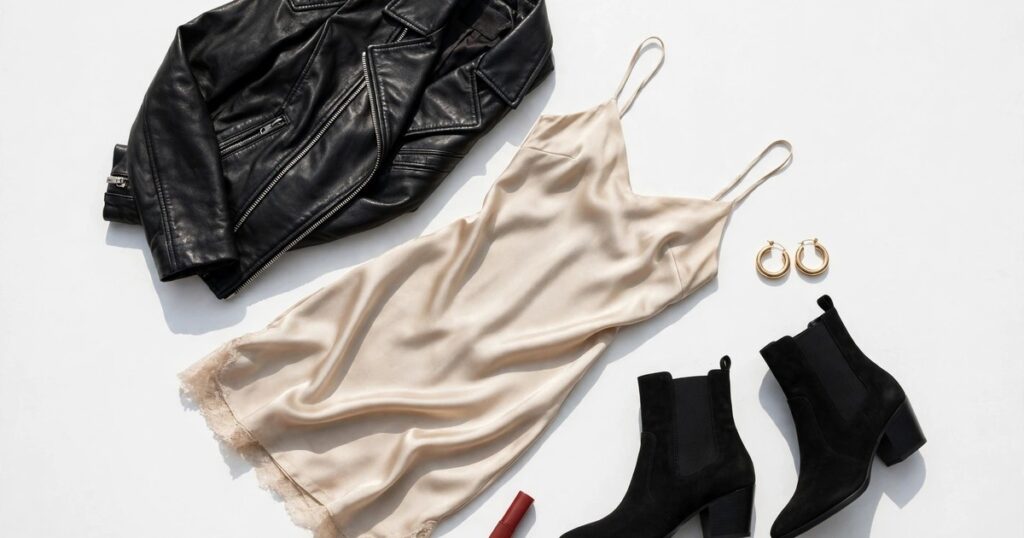
You do not need her face, her hair colour, or a vintage shop in New York to borrow the idea. Her look worked because it mixed two things that should not have worked together: Hollywood glamour and punk attitude. Here is how to get that tension right in 2026 without turning it into a costume. Start with one polished piece and one rough one. A sharp black blazer over a ripped-hem jean. A silk slip dress with battered boots. A clean red lip with messy, undone hair. If everything in the outfit is polished, you look formal. If everything is rough, you look like you gave up. The magic is in the clash. Keep the palette small. Black, white, red, and one metallic — that is the whole kit. When the colours stay quiet, the attitude does the talking, and you can wear the same formula to a gig, a dinner, or a work event just by swapping the shoes. The same black-and-red discipline shows up in our 90s fashion guide, where one strong colour does more work than five weak ones. Three outfits that use the formula right now: Night out: black slip dress, cropped leather jacket, ankle boots, red lip. No necklace needed — the jacket is the jewellery. Everyday cool: straight-leg jeans, white tee tucked in, black blazer, white trainers. Add dark sunglasses and you are done. Work with an edge: black wide-leg trousers, fitted black top, one gold hoop pair, pointed flats. It reads professional until someone notices the boots hiding underneath. And one mistake to avoid: do not buy the whole look in one go from one shop. Her style was collected, not purchased as a set — a thrift find here, a good jacket there, a lipstick you have worn for years. If it looks too matching, take one thing off. That last step is the whole trick.
Solo Career and Creative Expansion
At the peak of Blondie’s fame, Debbie Harry launched her solo career with the album KooKoo in 1981. While it didn’t surpass Blondie’s success, it proved her versatility as an artist.
After Blondie stopped working together in 1982, she stepped back from music for a time while Chris Stein dealt with a serious illness. It was a loyal, human choice — and one that cost her momentum at exactly the moment most stars would have pushed harder.
She returned with new music in 1986 and later reunited with Blondie in 1999 for the album No Exit, marking a successful comeback.
Face It, the Memoir, and the Second Act
If you only know the hits, you are missing the part of the story she chose to tell herself. In October 2019 she published Face It, a memoir built from her own essays and interviews with journalist Sylvie Simmons. It is not a tidy victory lap. It goes back to the downtown New York scene, the band’s breakup, the years caring for Chris Stein, and the long road back to the stage — and it does it in her own voice, funny and blunt by turns. Why does a memoir matter to a fashion and net-worth article? Because it changed how people talk about her. Before it, too many pieces treated her as a look: the blonde singer in the band. After it, the conversation had to include the choices — leaving a safe path, betting on a strange new band, walking away at the peak, coming back on her own terms. A look dates. Choices do not. It also explains the reunion better than any chart list can. Blondie’s 1999 comeback album No Exit did not work because nostalgia is powerful. It worked because the band still had something to say and an audience that had grown up with them and brought their own children along. That is a rare second act, and it is worth more to her legacy than any single reunion tour payday. If you read one thing beyond this article, make it the memoir’s early New York chapters. You will understand the songs differently afterwards — not as retro hits, but as dispatches from a specific, scrappy scene that she helped turn into pop history.

Acting Career and Film Appearances
Beyond music, she built an impressive acting portfolio, appearing in more than 30 film and television roles — often in independent and unconventional films rather than safe mainstream parts.
Three Films Worth Knowing
- Videodrome — a cult science-fiction horror film where she played a talk-show host drawn into a strange broadcast world.
- Forever, Lulu — an independent drama that showed her quieter, character-actor side.
- Hairspray — the original 1988 John Waters comedy, where her cameo became a fan favourite.
Her roles often leaned toward independent and unconventional films, reinforcing her image as an artist who values creativity over mainstream appeal.
Debbie Harry Net Worth 2026
As of 2026, Debbie Harry’s net worth is widely estimated at around $30 million. That is the figure most celebrity-wealth trackers repeat, including Celebrity Net Worth, and it is an estimate — not a bank statement, and not a number she has published herself. A few lower-quality pages claim $45 million or even $50 million, but they show no source for the higher figure, so this article does not use them. The honest answer is a range with a clear centre: about $30 million, with other pages disagreeing upward without evidence. If you see a single exact dollar figure presented as fact, treat it with suspicion — nobody outside her own finances can know it to the dollar.
How She Built Her Wealth
- Music royalties from Blondie’s global hits
- Touring and live performances
- Acting roles and media appearances
- Licensing and brand collaborations
- A 2020 catalog deal: in August 2020, she and Chris Stein sold 100% of their writer’s share and neighbouring-rights royalties in a 197-song catalog to Hipgnosis Songs Fund. The lump sum was never disclosed, so no article — including this one — can honestly turn that deal into a dollar amount.
How the Money Actually Worked
Most celebrity wealth stories read like magic: famous person, big number, done. Hers did not work like that. She earned it in layers, over fifty years, and each layer came with a trade-off you should know about before you repeat the number. First came the records. Blondie’s hits did not just sell once — they kept selling, streaming, and turning up in films, adverts, and playlists long after the charts moved on. That long tail is worth more than a single big year, because it keeps paying while the artist does other things. It is also why a band that peaked in 1981 can still be a working business in 2026. Second came the stage. Touring is where veteran bands actually make their living now, and Blondie’s reunion years proved it. A comeback tour does not need a new hit to sell tickets — it needs a catalog people already love and a singer people still want to see in the room. That is a very different business from chasing a first hit, and it is a much steadier one. Third came the catalog sale. In 2020, she and Chris Stein sold the writer’s share and neighbouring-rights royalties in 197 songs to Hipgnosis. Think of it this way: instead of collecting small payments song by song for years, they took one large payment up front and handed the future income to someone else. It is a sensible late-career move, but it also means future royalty income from those songs no longer flows to them in the same way. Anyone who adds the sale price on top of the royalties — as if she kept both — is double-counting. Fourth came everything else: solo records, film and television roles, books, and appearances. None of these alone explains $30 million. Together, spread over five decades, they do. That is the honest shape of this fortune: not one jackpot, but a long career that never fully stopped.

Her financial success reflects long-term strategy rather than short-lived fame.
Mistakes People Make When They Read Celebrity Net Worth
Before you quote any number from this page — including ours — run it through these four checks. They will save you from repeating the most common errors on the internet. 1. Estimate is not income. A net-worth figure is a guess at everything owned minus everything owed, at one moment in time. It is not a salary, and it is not cash in a bank account. A singer can be ‘worth’ $30 million and still not have $30 million to spend. For another long-running television star whose wealth is also mostly an estimate, see Mariska Hargitay’s net worth in 2026. 2. One source copied a hundred times is still one source. Most pages repeating $30 million are repeating the same tracker. That does not make it wrong — but it does mean you should not treat a hundred identical pages as a hundred independent confirmations. 3. A catalog sale is not free money on top of royalties. As Section 4A explains, selling future royalties means giving up future royalty income. If a page adds a guessed sale price to full lifetime royalties, it is counting the same money twice. 4. Old figures do not update themselves. A page that says ‘2025’ in its title may still carry a 2021 estimate. Always check the date on the figure, not just the date on the page. This article’s figure is labelled ‘as of 2026’ precisely so you can tell when it needs revisiting. The same date-check applies to other biography figures — see Paula Jones’ net worth for a case where a settlement figure is often mistaken for a fortune.
Awards, Recognition, and Legacy
Debbie Harry’s contributions have earned her numerous accolades, including induction into the New Jersey Hall of Fame in 2017.
Her legacy extends beyond awards. She helped redefine:
- The role of women in rock music
- The relationship between music and fashion
- The concept of artistic reinvention
What is Debbie Harry’s net worth in 2026?
It is widely estimated at around $30 million. That is a tracker estimate, not a figure she has published herself, and a few lower-quality pages claim higher numbers without showing a source.
How old is she in 2026?
She was born on July 1, 1945, so she turned 81 in July 2026.
Was Debbie Harry adopted?
Yes. She was born Angela Trimble and adopted at three months old by Catherine and Richard Harry of Hawthorne, New Jersey, who renamed her Deborah Ann Harry.
What are Blondie’s biggest songs?
Their four US Number Ones are ‘Heart of Glass’ (1979), ‘Call Me’ (1980), ‘The Tide Is High’ (1981), and ‘Rapture’ (1981) — the last of these was the first US Number One to feature rap vocals.
Did Debbie Harry sell Blondie’s music catalog?
In August 2020, she and Chris Stein sold their writer’s share and neighbouring-rights royalties in a 197-song catalog to Hipgnosis Songs Fund. The amount was never disclosed.
What is Debbie Harry’s memoir called?
Face It, published in October 2019. It mixes her own essays with interviews and covers her New York years, Blondie’s breakup and reunion, and her acting and solo career.
Final Thoughts: Why She Still Matters in 2026
Debbie Harry’s journey proves that success isn’t just about talent—it’s about adaptability, courage, and authenticity. From underground clubs in New York to global fame, she built a legacy that continues to inspire artists and fans alike.
If you take one thing from her story, let it be this: you do not need to stay in one lane. She moved from punk clubs to pop charts to film sets to a memoir, and each move added another layer instead of erasing the last one. That is why, fifty years on, new listeners still find her first — and stay.

1 thought on “How Rich Is Debbie Harry in 2026? Net Worth, Earnings & Iconic Looks Explained”