
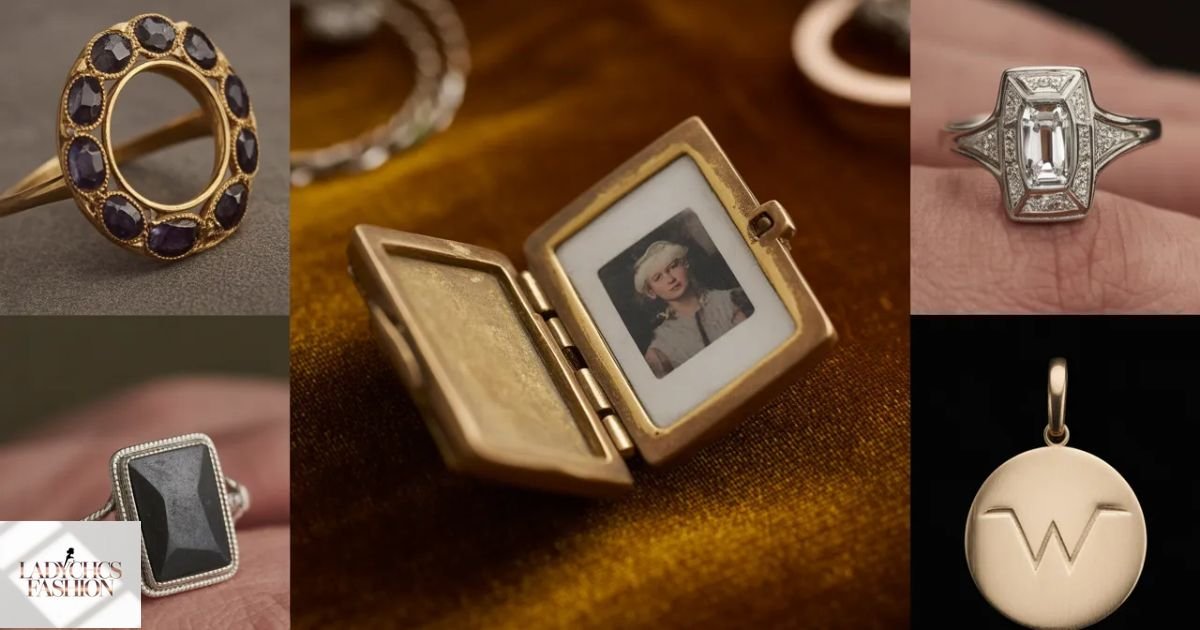
Jewelry has always been more than decoration. In fact, how jewelry has reflected personal stories across time reveals a powerful connection between identity, emotion, and culture. From ancient talismans to modern fine jewelry, each piece carries intention—sometimes subtle, sometimes boldly declared.
Across centuries, people have used jewelry to express love, grief, rebellion, faith, and ambition. Whether it’s heirloom jewelry passed through generations or newly crafted sustainable luxury pieces, the message remains the same: jewelry tells stories words cannot.
This article explores how jewelry has reflected personal narratives across time—and how you can curate pieces that speak for you today.
How Jewelry Has Reflected Personal Stories Across Time
Jewelry has never been just decoration. In fact, understanding how jewelry has reflected personal stories across time reveals a deeper truth—humans have always used adornment to express identity, emotion, and memory. From ancient beads carved out of bone to today’s refined fine jewelry, every piece carries a narrative shaped by culture and personal experience.
Across civilizations, jewelry has acted as a silent storyteller. In early societies, it signaled tribe, status, or spiritual beliefs. Later, it evolved into a medium of love, grief, and power. Whether it’s a mourning locket from the Victorian era or modern heirloom jewelry passed through generations, each piece preserves a moment in time that words often fail to capture.
What makes jewelry unique is its ability to combine material science with emotional depth. Gold, for instance, resists corrosion, symbolizing eternity, while gemstones carry centuries of gemstone symbolism tied to human beliefs. This fusion of durability and meaning allows jewelry to outlive its wearer, turning it into a physical memory that connects past, present, and future.
Today, the narrative continues in new forms. Consumers now seek pieces that align with their values, choosing sustainable luxury options like lab-grown diamonds or ethically sourced materials. Even affordable luxury pieces such as moissanite rings reflect modern priorities—individuality, ethics, and smart spending.
Ultimately, jewelry remains one of the most powerful forms of personal expression. It doesn’t just reflect beauty—it reflects life itself. And that’s exactly how jewelry has reflected personal stories across time: by transforming human experiences into something tangible, lasting, and deeply meaningful.
The Evolutionary Psychology: Why Humans Wore Jewelry Before Clothes
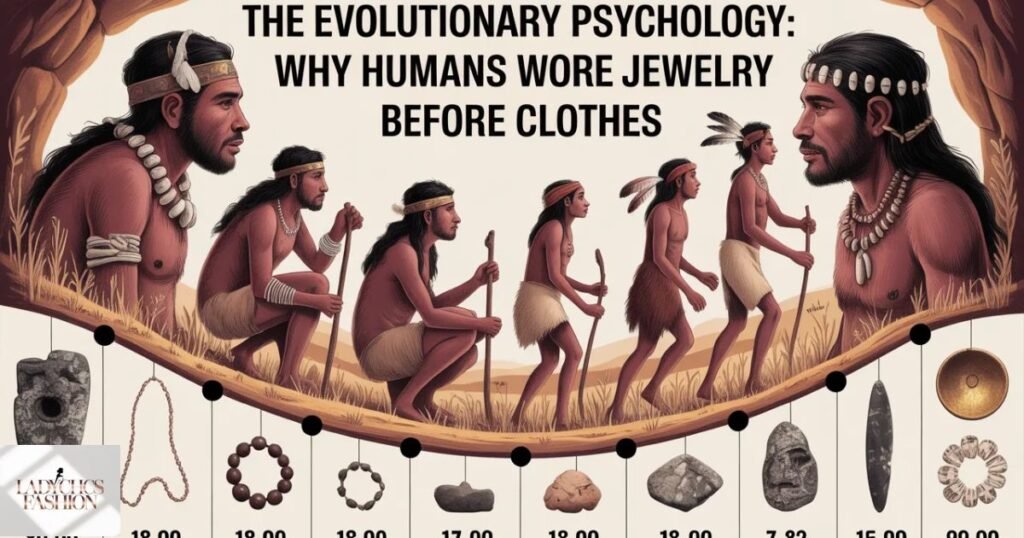
Long before structured societies emerged, humans adorned themselves. Archaeologists have uncovered shell beads dating back over 100,000 years—predating tailored clothing. This raises a fascinating question: why did humans prioritize ornamentation so early?
The answer lies deep in evolutionary psychology.
Jewelry as Identity and Survival Signaling
Early humans used adornments to communicate identity—tribe membership, social rank, or even mating readiness. Bright shells, bones, and stones weren’t random; they were visual cues in a world without language as we know it.
Wearing jewelry increased social cohesion. It helped others quickly identify friend or foe. In evolutionary terms, that could mean survival.
The Chemistry of Attraction: Why Metals Matter
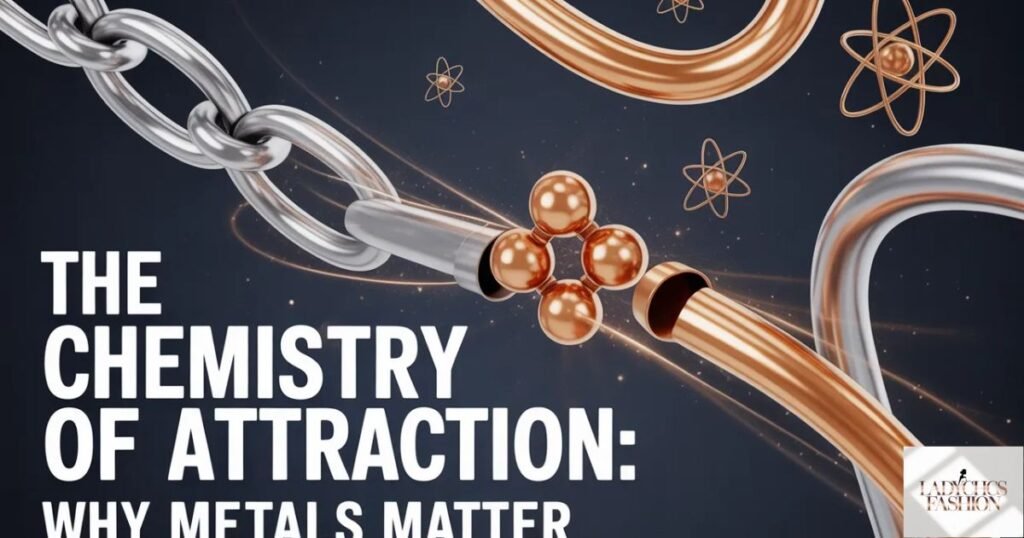
There’s also a biological layer. Metals like gold don’t corrode or tarnish easily, which subconsciously signals permanence and value. Gold’s atomic stability (it resists oxidation) makes it symbolically “eternal”—a reason it dominates fine jewelry even today.
Silver, on the other hand, has antimicrobial properties. Ancient civilizations believed it had protective qualities, which fed into its use in talismanic jewelry.
Talismanic Jewelry: The Psychology of Protection
Humans have always sought control over uncertainty. Jewelry became a portable form of protection—amulets believed to ward off harm or attract luck.
This “talismanic thinking” still exists. Today’s charm bracelets, birthstone rings, and engraved pendants reflect the same psychological need: to carry meaning, memory, and protection wherever we go.
Era-Specific Storytelling: Jewelry Through Historical Lenses
Every era reshaped jewelry’s purpose. Styles evolved—but more importantly, the stories behind them shifted with cultural values.
Victorian Mourning Jewelry: Love Beyond Death
The Victorian era transformed grief into wearable art.
When Prince Albert died in 1861, Queen Victoria entered lifelong mourning—and influenced an entire generation. Mourning jewelry became a way to preserve memory and express eternal love.
Key Features of Mourning Jewelry
- Jet black stones (especially Whitby jet)
- Lockets containing hair of the deceased
- Engraved dates, initials, or poetic inscriptions
- Dark enamel with symbolic motifs (weeping willows, urns)
These pieces weren’t just accessories—they were emotional anchors. They allowed people to carry their loved ones physically and spiritually.
This tradition still echoes in modern heirloom jewelry, where emotional value outweighs material worth.
Renaissance Jewelry: Power, Status, and Divine Right
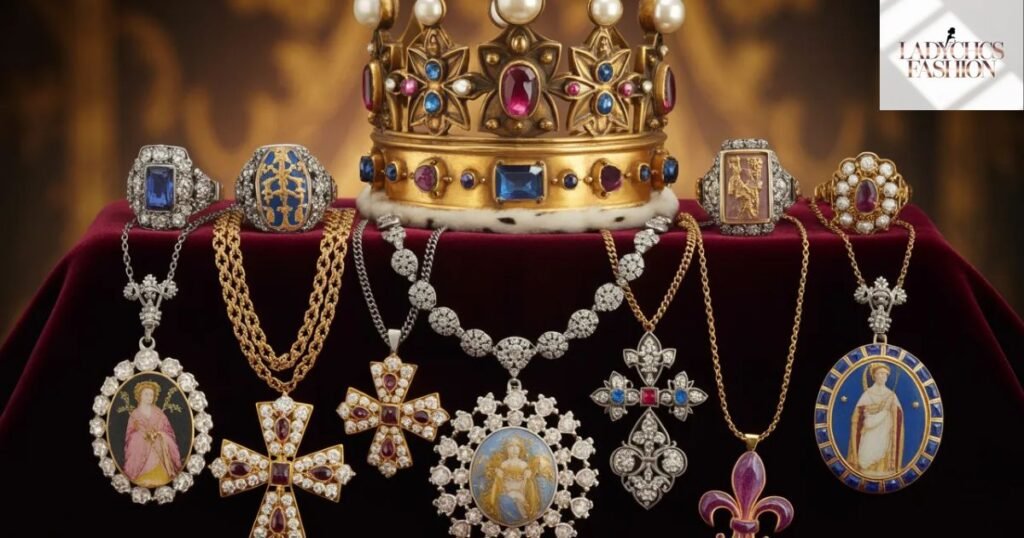
During the Renaissance, jewelry became a visual language of power.
Goldsmithing reached new heights. Royals and nobles used jewelry to display wealth, education, and divine favor. Pieces were often embedded with religious symbolism, aligning personal identity with spiritual authority.
Symbolism and Materials
- Rubies symbolized passion and power
- Emeralds represented wisdom and rebirth
- Diamonds signified invincibility
Jewelry wasn’t subtle—it was strategic. Wearing elaborate fine jewelry reinforced one’s position in a rigid social hierarchy.
Art Deco Jewelry: Rebellion, Modernity, and Freedom
Fast forward to the 1920s, and everything changed.
Art Deco jewelry rejected tradition. It embraced geometry, bold contrasts, and industrial inspiration. This was the era of jazz, liberation, and women redefining their roles in society.
Why Art Deco Was Revolutionary
- Clean lines replaced ornate detailing
- Platinum became the metal of choice
- Diamonds were cut for brilliance, not symbolism
- Designs reflected machinery, speed, and modern life
For many women, jewelry became a symbol of independence. Wearing bold pieces wasn’t just fashionable—it was a statement of autonomy.
Today’s vintage engagement rings often draw inspiration from this era, blending history with contemporary style.
The Modern Shift: Jewelry as Ethical and Personal Expression
In today’s world, jewelry tells a different kind of story—one rooted in values.
Consumers are no longer just asking “How does this look?” They’re asking “What does this represent?”
Lab-Grown Diamonds: Science Meets Ethics
Lab-grown diamonds are chemically identical to natural diamonds. They’re formed using high-pressure, high-temperature (HPHT) or chemical vapor deposition (CVD) processes.
But their meaning goes beyond science.
What They Represent
- Environmental responsibility
- Transparency in sourcing
- Modern innovation
For many buyers, choosing lab-grown diamonds reflects a commitment to sustainable luxury.
Moissanite: The Rise of Affordable Luxury
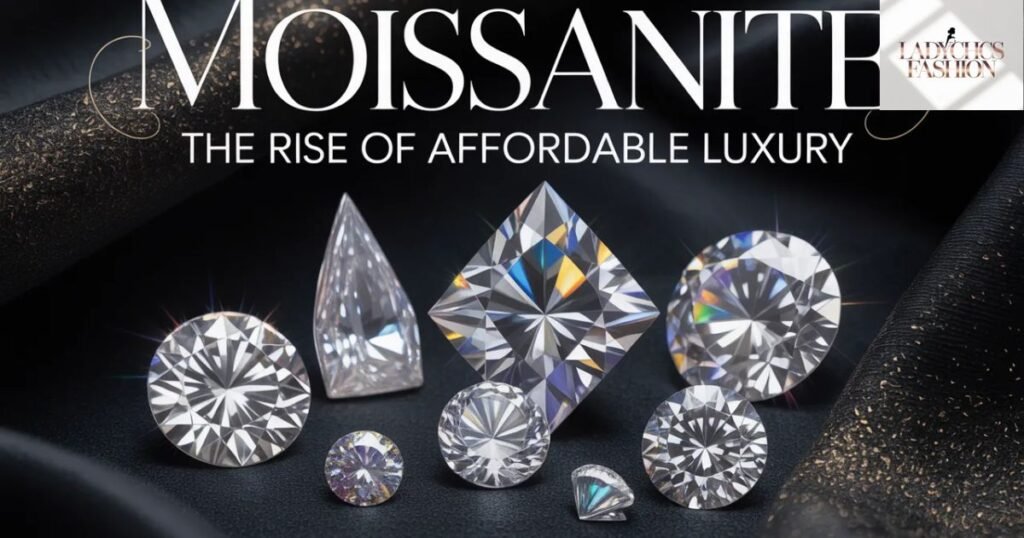
Moissanite offers brilliance that rivals diamonds—but at a fraction of the cost.
Originally discovered in a meteor crater, it carries a cosmic origin story. Today, it symbolizes smart luxury and individuality.
Why It’s Gaining Popularity
- Exceptional sparkle (higher refractive index than diamonds)
- Ethical sourcing
- Accessibility for younger buyers
Moissanite has become a cornerstone of affordable luxury, allowing people to invest in meaningful jewelry without financial strain.
Modern Brands Bridging Past and Future
Brands like Golden Bird Jewels are blending traditional craftsmanship with modern values. They recreate vintage aesthetics using ethical materials, turning new pieces into future heirloom jewelry.
This fusion reflects a broader trend: honoring history while embracing innovation.
Heirlooms as Time Machines: Why We Pass Jewelry Down
Jewelry is one of the few objects that gains emotional value over time.
A ring isn’t just a ring—it’s a story layered across generations.
The Psychology of Heirloom Jewelry
Passing down jewelry satisfies a deep human need: continuity.
It allows individuals to feel connected to their ancestors. Wearing a grandmother’s necklace isn’t just sentimental—it reinforces identity and belonging.
Why Heirlooms Matter
- They carry personal and family history
- They create emotional permanence
- They symbolize legacy and memory
Unlike digital photos or fleeting trends, jewelry is tangible. It endures.
Memory Encoding and Physical Objects
Neuroscience suggests that physical objects trigger stronger memories than abstract concepts. Jewelry, worn regularly, becomes embedded in daily life—making it a powerful memory anchor.
This is why heirloom jewelry often feels irreplaceable, regardless of its market value.
Gemstone Symbolism: Hidden Meanings in Every Stone
Gemstones have long been associated with specific meanings. Choosing a stone isn’t just aesthetic—it’s symbolic.
Popular Gemstone Meanings
- Sapphire: loyalty and wisdom
- Ruby: passion and vitality
- Emerald: growth and renewal
- Amethyst: clarity and protection
These associations allow wearers to express identity subtly. A gemstone becomes a personal narrative encoded in color and light.
How to Choose Jewelry That Tells Your Story Today
Modern jewelry offers endless choices—but the key is intentionality.
Here’s how to select pieces that reflect your personal journey.
1. Define Your Core Values
Start with what matters most to you.
Do you prioritize sustainability? Heritage? Innovation? Your values should guide your choices—whether that means investing in or exploring affordable luxury options.
2. Choose Meaningful Materials
Different metals and stones carry different messages.
- Gold: permanence and tradition
- Silver: clarity and protection
- Platinum: strength and rarity
Understanding material symbolism adds depth to your collection.
3. Incorporate Personal Milestones
Jewelry becomes more meaningful when tied to life events.
Consider marking:
- Birthdays
- Career achievements
- Relationships
- Personal transformations
This transforms jewelry into a timeline of your life.
4. Blend Vintage and Modern Styles
Combining old and new creates a layered narrative.
Pair vintage engagement rings with contemporary bands. Mix inherited pieces with modern designs. This approach reflects both heritage and individuality.
5. Think Long-Term: Future Heirlooms
Ask yourself: Will this piece still matter in 20 years?
Choosing timeless designs and durable materials ensures your jewelry can become tomorrow’s heirloom jewelry.
The Emotional Power of Jewelry in Everyday Life
Jewelry isn’t reserved for special occasions anymore.
People now wear meaningful pieces daily—turning ordinary moments into expressions of identity.
A simple necklace can represent resilience. A ring can symbolize self-love. These small choices create a powerful narrative over time.
Frequently Asked Questions (FAQs)
Why is jewelry considered a form of storytelling?
Jewelry carries symbolic meaning, emotional value, and historical context. Each piece reflects personal experiences, making it a wearable narrative.
What is heirloom jewelry?
Heirloom jewelry refers to pieces passed down through generations, often holding sentimental and historical significance beyond their material value.
Are lab-grown diamonds real diamonds?
Yes, they are chemically and physically identical to natural diamonds. They differ only in origin, making them a popular choice for sustainable luxury.
What makes vintage engagement rings special?
Vintage engagement rings reflect craftsmanship and design from specific historical periods, offering unique styles and deeper storytelling compared to modern mass-produced rings.
How can I choose meaningful jewelry?
Focus on personal values, life milestones, and symbolism. Select materials and designs that align with your identity and long-term vision.
Conclusion: Your Story, Set in Stone
Ultimately, understanding how jewelry has reflected personal stories across time helps us choose pieces that carry meaning, not just beauty.
From ancient talismans to modern fine jewelry, every piece carries intention. It reflects who you are, where you’ve been, and what you value.
In a world that moves fast, jewelry offers something rare: permanence.
So the next time you choose a piece—whether it’s affordable luxury, a symbolic gemstone, or a future heirloom—remember this:
You’re not just buying jewelry.
You’re telling your story.